
Case Study
FedEx ISP Case Study: 40-Truck Fleet Saves over $54,000/Year
How a FedEx Independent Service Provider eliminated shop visits, cut spare vehicles from 4 to 1, and reclaimed 40+ hours per month with managed maintenance.
5 min read
Ask most fleet operators what "managed maintenance" is, and you'll get some version of: "Someone else handles our oil changes."
That's not wrong. But it's like saying a gym membership is "access to a treadmill." Technically true. Completely missing the point.
The oil change is the scheduled work. It's what gets the tech in front of your vehicle on a regular cadence. But the real value — the thing that separates managed maintenance from just outsourcing — is what happens during that visit beyond the oil change.
Here's what a managed maintenance visit actually looks like:
A Slick technician arrives at your yard after hours. They're there for a scheduled oil change on Vehicle 12. That takes 30 minutes. But while they're under the truck, they're also running a full multi-point inspection — brakes, tires, fluids, belts, hoses, battery, lights, suspension. Every finding gets photographed and documented in TruView.
That inspection is where the magic happens.
The tech finds the brake pads on Vehicle 12 are at 60% wear. Not a problem today. Not even a problem next month. But at the rate this truck runs, those pads will hit replacement threshold in about 8 weeks. So it gets flagged. Documented. Scheduled for the next visit.
No emergency. No breakdown. No tow truck. No missed route. Just a $300 scheduled brake replacement instead of a $1,200 roadside failure.
That's one visit. Now multiply it across your fleet, visit after visit, month after month. This is the rhythm.
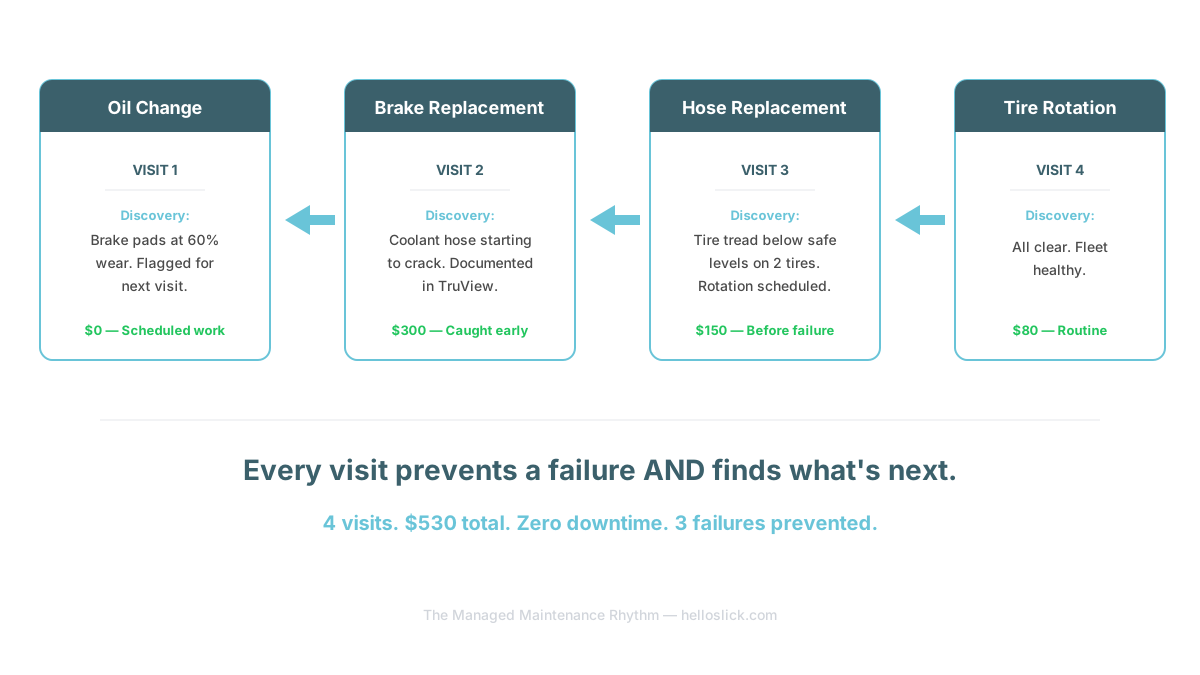
The rhythm isn't a single visit — it's what happens when visits stack up over time. Each one prevents a future emergency AND discovers what's coming next.
Visit 1: Oil change + inspection. Tech finds brake pads at 60% wear. Flagged for next visit. Cost: $0 beyond scheduled work.
Visit 2: Scheduled brake replacement — $300 instead of waiting for failure. During the inspection, tech finds a coolant hose starting to crack. Photos in TruView. Documented.
Visit 3: Hose replaced before it blows — $150 instead of an engine overheat, a tow, and 3 days in a shop. Inspection catches tire tread below safe levels on two tires. Rotation scheduled.
Visit 4: Tires rotated — $80. Inspection comes back clean. Fleet is healthy.
Four visits. $530 total. Zero downtime. Three failures prevented that would have cost $4,900+ and 4 days of downtime.
That's the compounding effect. The rhythm doesn't just maintain vehicles — it builds a rolling picture of your fleet's health that gets smarter every cycle. TruView learns wear patterns, mileage cycles, and seasonal stress across your entire fleet. By month six, the system is predicting what's coming before the tech even opens the hood.
Without consistent visits, the same problems exist on the same vehicles. The difference is when you find them.
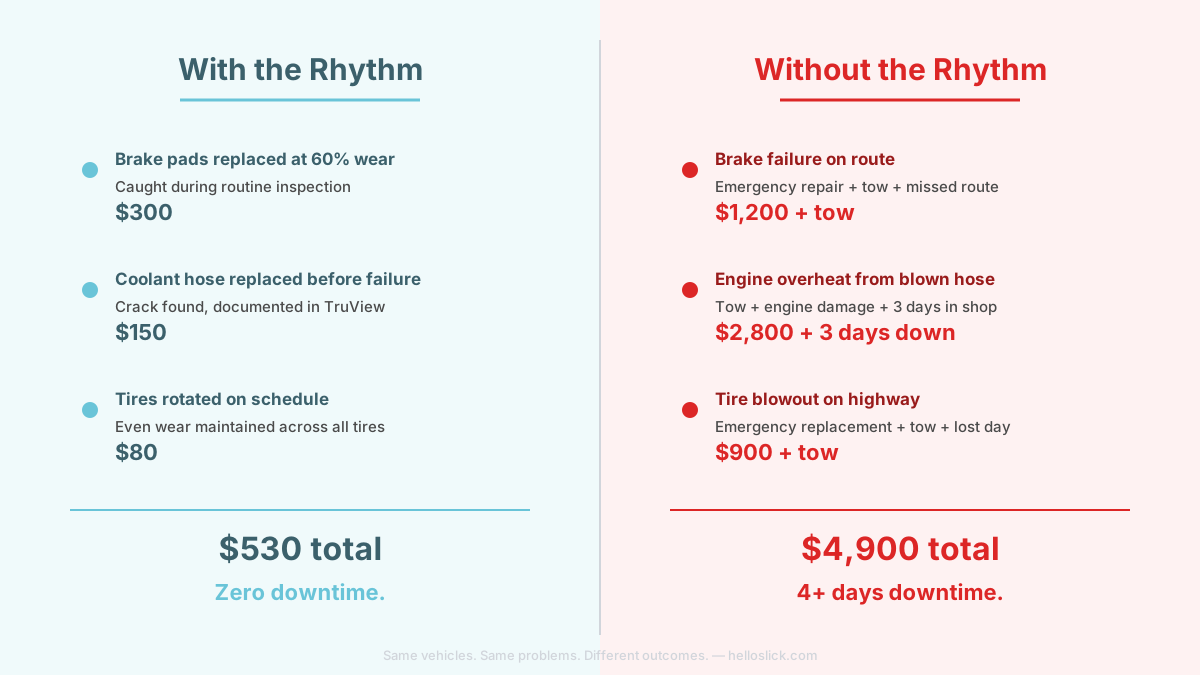
Without the rhythm, the brake pads don't get caught at 60%. They get caught at 0% — when the driver calls from the side of the road. The coolant hose doesn't get caught when it's cracking. It gets caught when the engine overheats on I-95 and the truck gets towed to whatever shop is closest. The tires don't get rotated on schedule. They blow out on the highway.
Same vehicles. Same components. Same wear. But caught at failure instead of caught at wear. And every failure costs 2–5x what the scheduled fix would have cost — plus downtime, plus a spare vehicle you now need to carry, plus the 4–6 hours your operations team spends managing the crisis instead of running the business.
This is the part most people miss when they hear "managed maintenance."
The oil change is the excuse. The inspection is the product. And the consistency is what makes it work.
A single inspection is useful. But a single inspection with no follow-up is just a snapshot. The rhythm turns snapshots into a movie — a continuous, documented view of every vehicle in your fleet, updated every visit, with trends that emerge over time.
After 6 months of data, TruView can tell you:
That's not an oil change vendor. That's a maintenance operation running on your behalf.
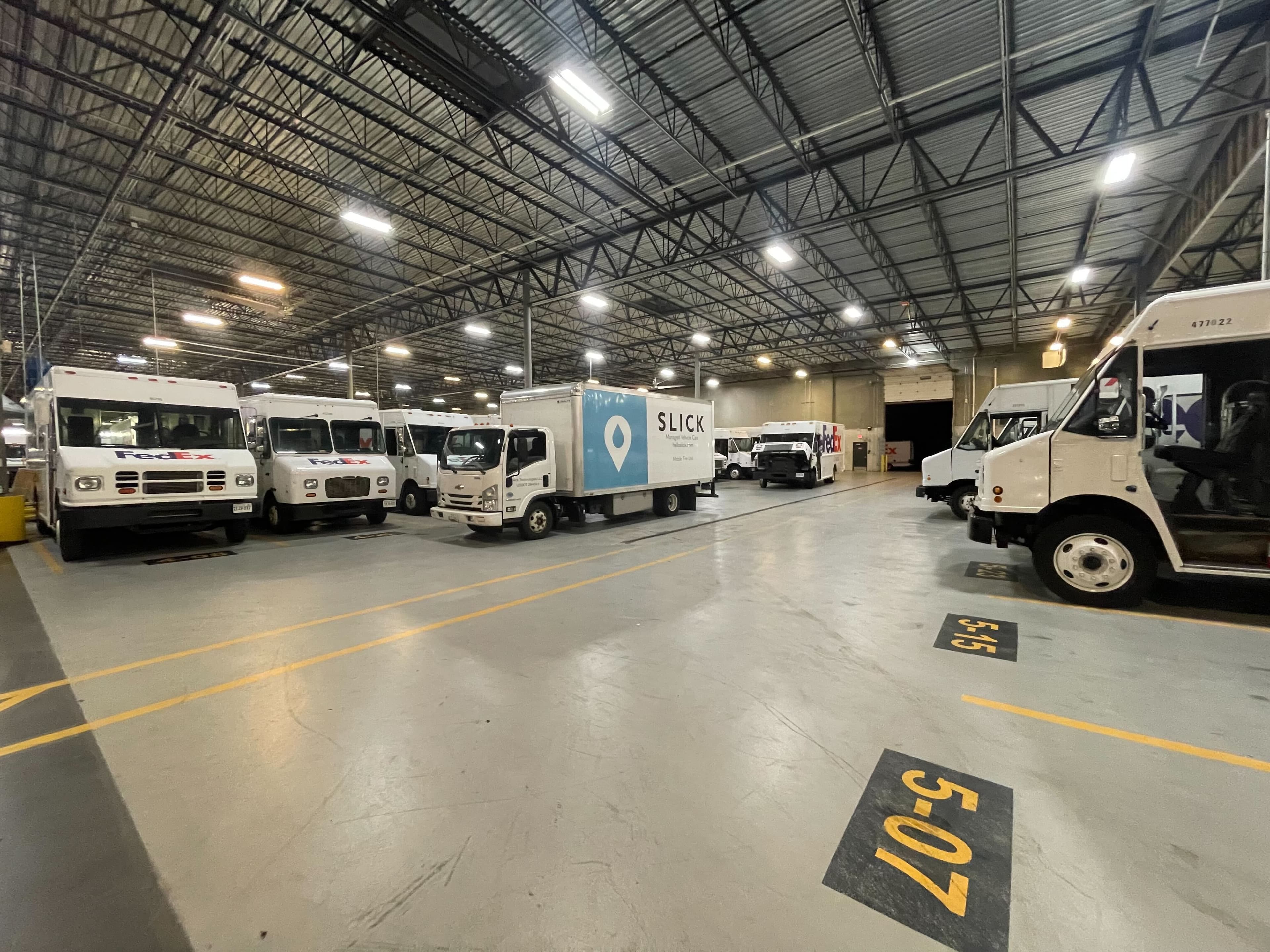
A FedEx ISP running 40 delivery trucks switched to Slick's managed maintenance. First month: every vehicle got a full multi-point inspection. Slick's techs found 6 vehicles with brake wear that hadn't been caught and 3 with tire tread below safe levels. Nine potential breakdowns — found in 30 days because the rhythm put a trained tech in front of every truck.
By month three, the fleet was on a consistent service cadence. TruView was auto-scheduling visits based on actual mileage. The fleet manager went from spending 10+ hours a week chasing shops to reviewing a dashboard once a week.
By month twelve: spare vehicles dropped from 4 to 1. Fleet manager reclaimed 40+ hours per month. Over $54,000 saved annually — just from eliminating spares they no longer needed.
The maintenance didn't just get outsourced. The chaos got replaced with a rhythm. And the rhythm created visibility, early detection, and compounding savings that no patchwork of shops could ever deliver.
Here's the simplest way to think about it:
Before: You manage vendors. You coordinate shops. You chase invoices. You react to breakdowns. You carry spares because you can't trust the system. Maintenance is a problem you manage.
After: Slick shows up on a rhythm. Every visit is an oil change AND an inspection AND a discovery opportunity. Problems get caught at 60% instead of 100%. Your fleet manager reviews a dashboard instead of making phone calls. One provider. One platform. One monthly cost.
Managed maintenance isn't outsourcing. It's replacing chaos with a rhythm that compounds.
The rhythm is the product.
How a FedEx Independent Service Provider eliminated shop visits, cut spare vehicles from 4 to 1, and reclaimed 40+ hours per month with managed maintenance.
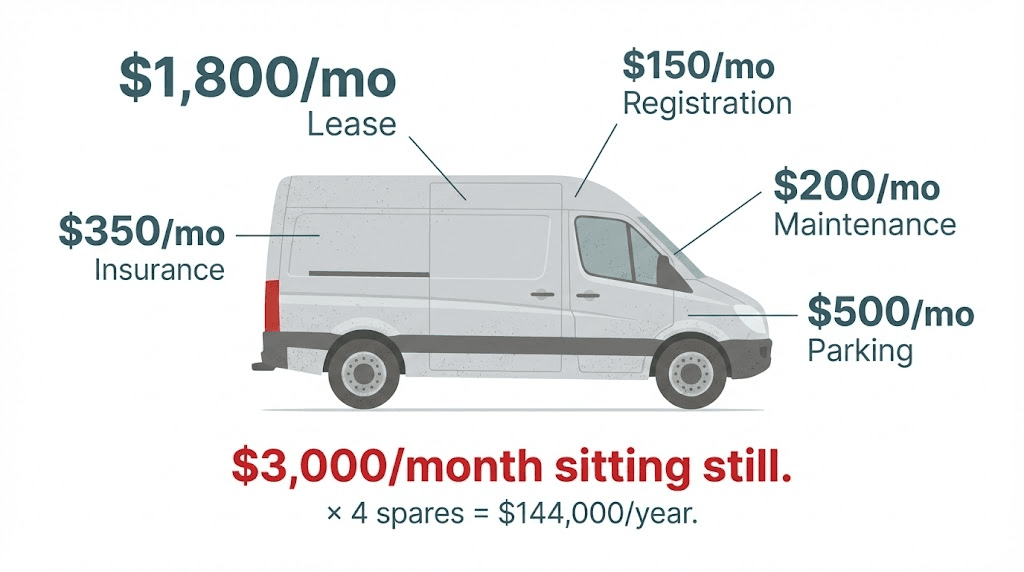
Most fleets carry spare vehicles as a hedge against breakdowns. But when you add up the lease, insurance, registration, maintenance, and parking — spares are one of the most expensive line items you're not tracking.
Book a discovery session and see how Slick keeps your fleet running with less effort.